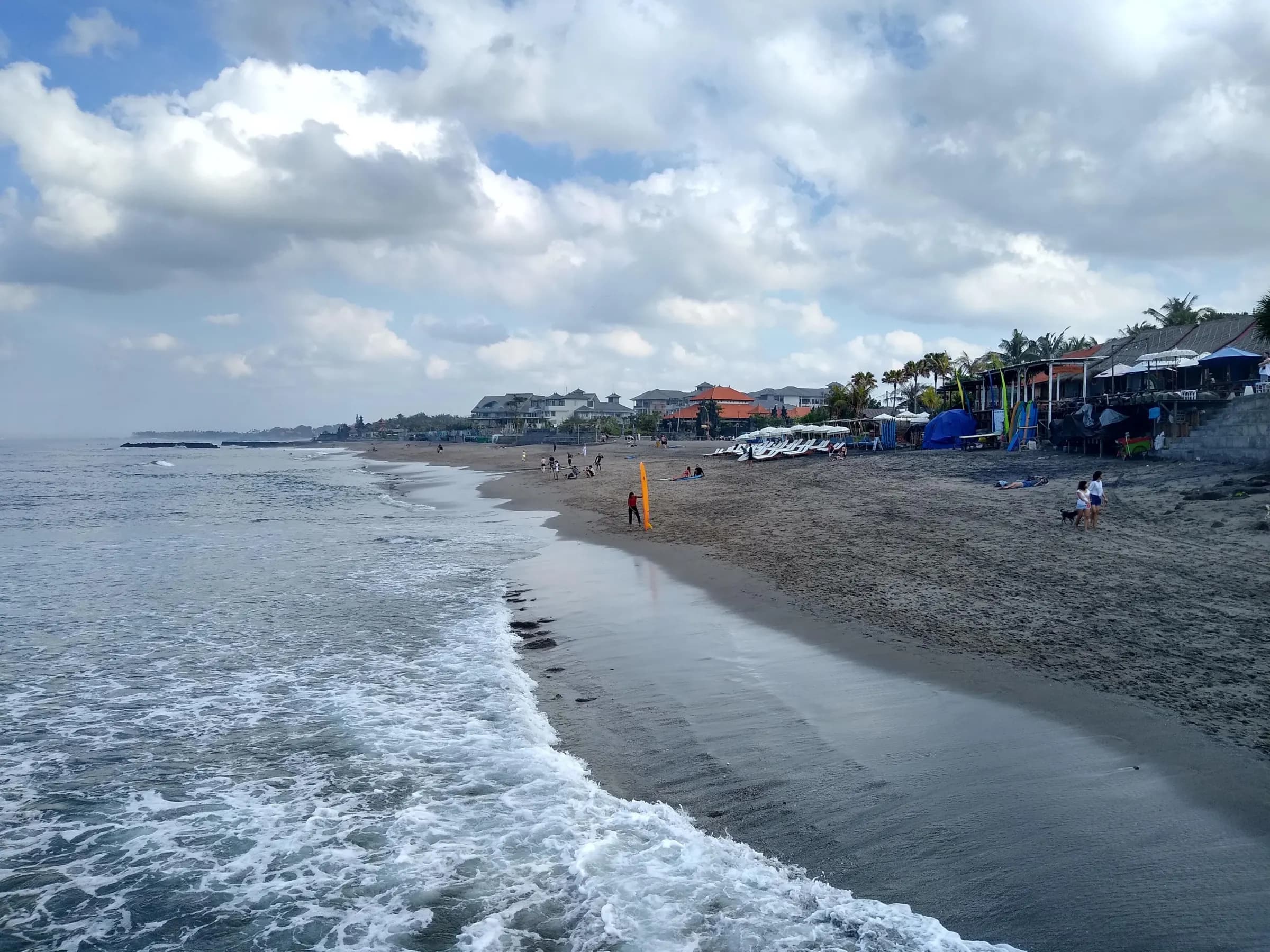
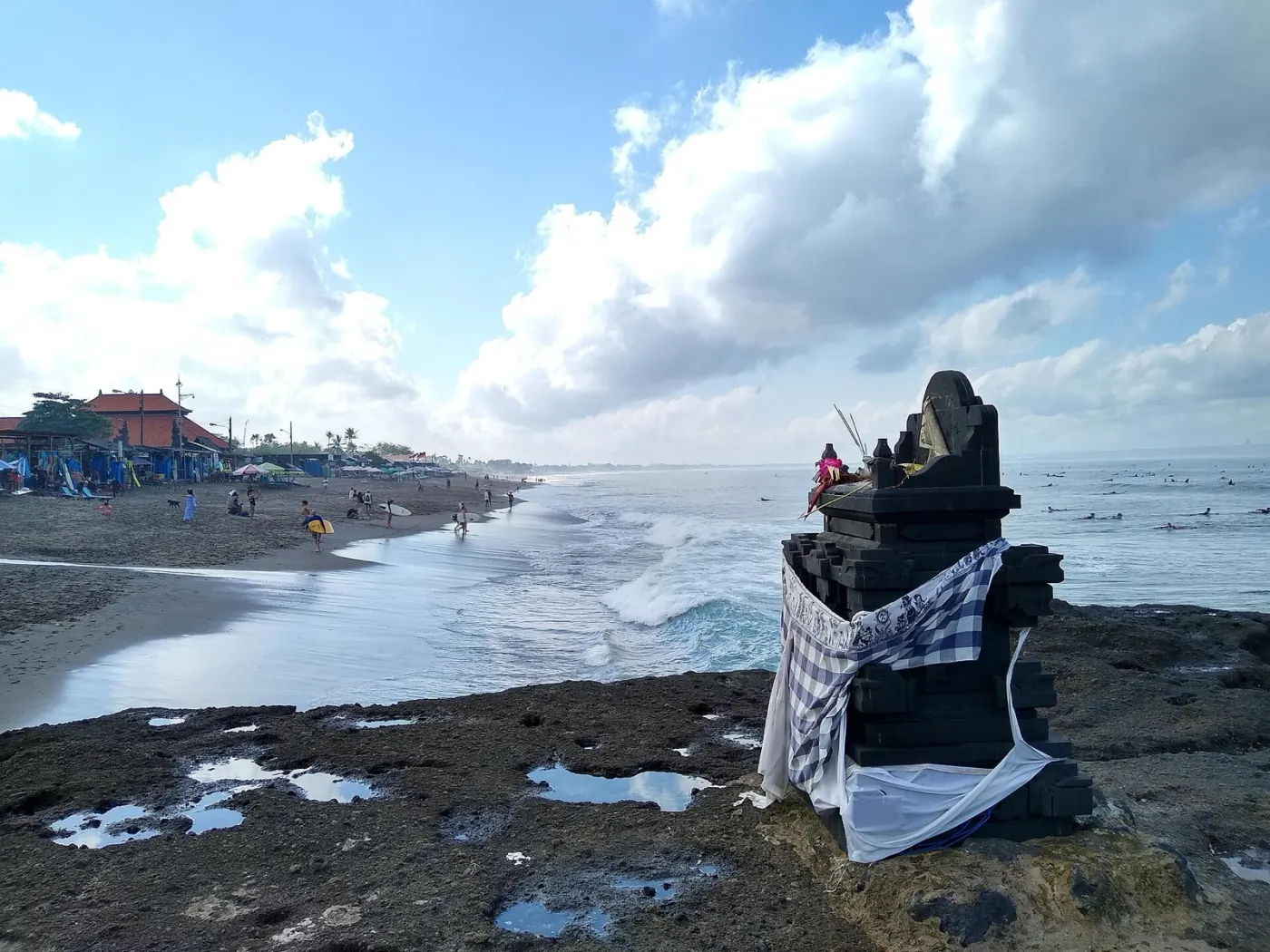
Canggu is one continuous strip of black volcanic sand, and you can start walking at Berawa and arrive in Pererenan having crossed Batu Bolong and Echo without noticing a boundary. Nothing here needs a cliff staircase, which is the single biggest difference from the Bukit. So the question is not how you get down. It is which mood you want.
Batu Bolong is the loud, social middle: surf schools, board hire, bars and cafés directly behind the sand, and the biggest sunset crowd on the coast. Berawa is the wide, structured one where the beach clubs are, and it has enough room to walk away from the music. Nelayan, tucked between the two, is the quiet middle child — fishing boats, a few warungs, poor surf and a good morning walk. Echo Beach is the surf-watching beach, with a wall of warungs looking straight at a punchier peak. Pererenan is the calm west end, backed by rice fields, with fewer venues and an older crowd.
On swimming, be careful about what this coast is. These are beach breaks and rock shelves with rips, not a lagoon, and the sensible default is to treat the sea in Canggu as somewhere you wade, bodysurf near the shore or surf, rather than swim out from. There is no lifeguard cover along most of it. If you want a swimming beach in the proper sense of the word, that is one of the honest reasons people ride south to the Bukit.
Two practical things nobody warns you about. Black sand absorbs heat and is genuinely painful underfoot between about 11:00 and 15:00, so carry something for your feet. And the beach is free — there is no entry booth anywhere along this stretch — so the only cost of a Canggu beach day is parking, a drink and whatever you rent, which makes it the cheapest full day available here.
Finally, the western edge. Our coverage stops at Pererenan, because that is where the area guide draws the Canggu boundary. Seseh and Cemagi are the next villages along, quieter and more local, and people do ride out to them — but they are a separate outing, not an extra stop on a Canggu beach walk.