Bali · Indonesia

Bali Surf Trip Guide: Seasons, Visas and What It Really Costs

Bali is the rare surf destination that works for a first-timer and for someone who has surfed for twenty years — as long as they go to different beaches. The island splits neatly in two: the Bukit Peninsula in the south catches everything the Indian Ocean throws at it, and the gentler beach breaks up the west coast are where almost everyone actually learns.

By Laurence TuchinPublished August 15, 20269 sourcesHow we research

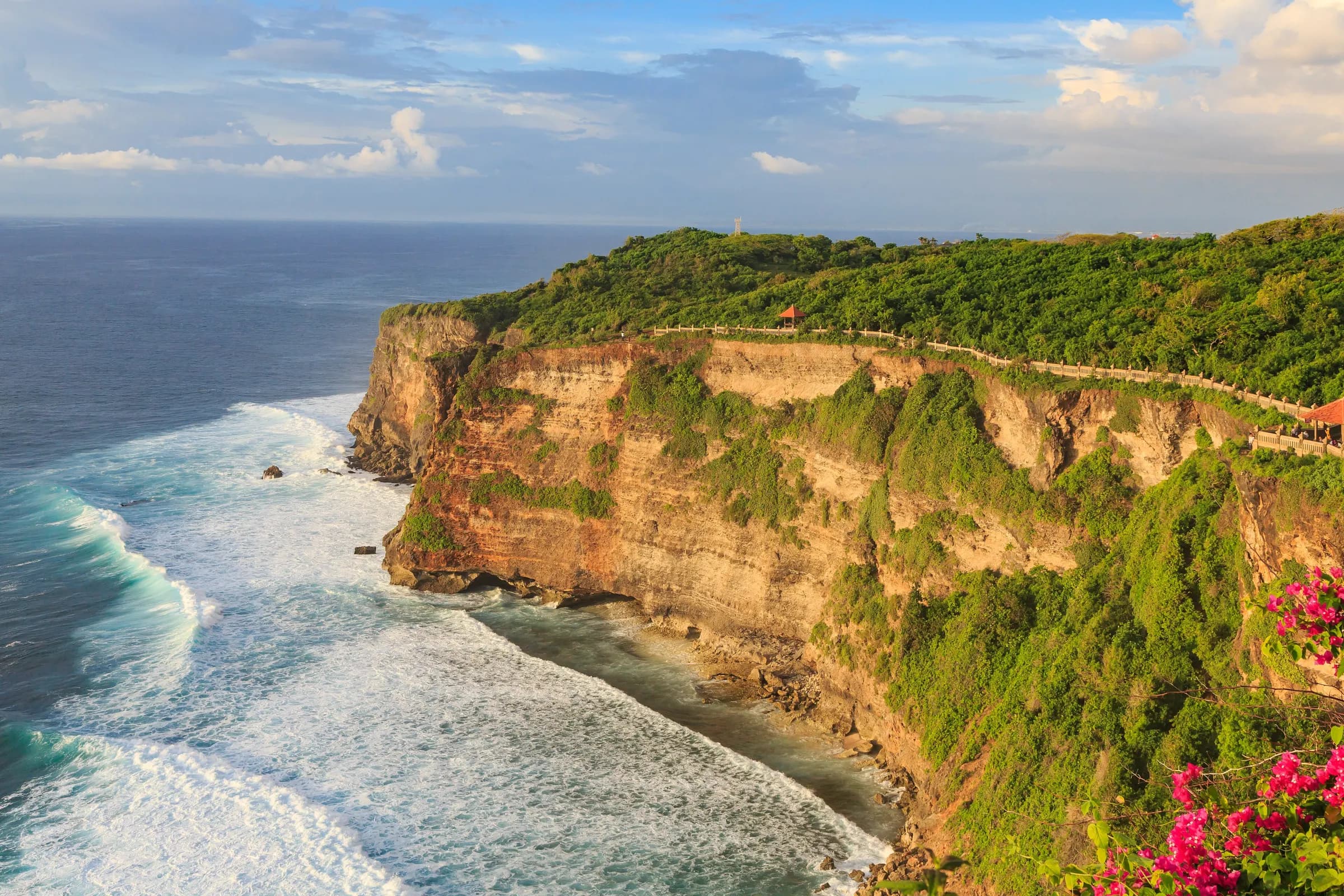
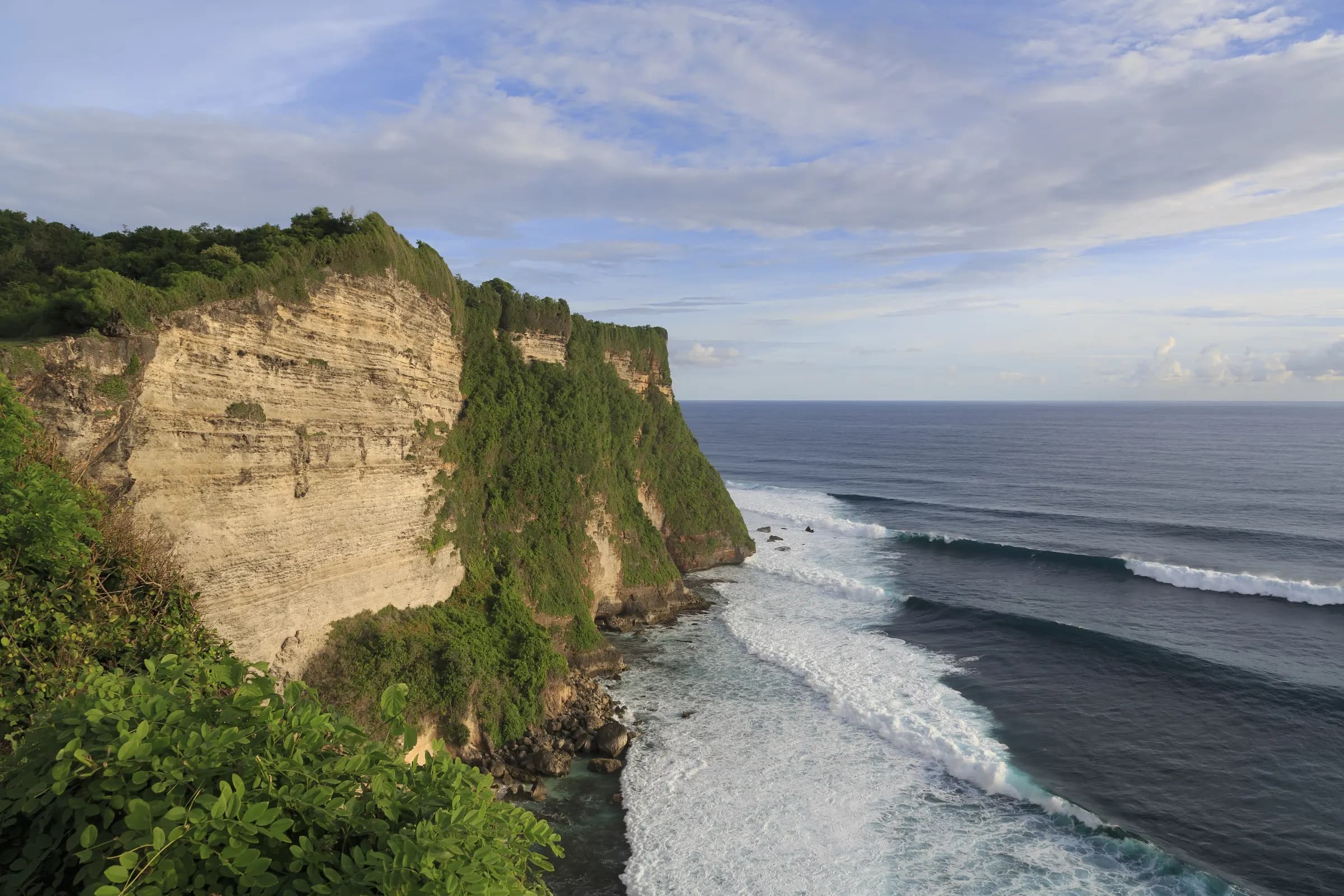
Tall limestone cliffs covered in green scrub above white surf, with a clifftop path and pink bougainvillea in the foreground
The cliffs at Pura Luhur Uluwatu, on Bali's Bukit Peninsula. Photo: CEphoto, Uwe Aranas, CC BY-SA 3.0, via Wikimedia Commons

At a glance

Water temperature
25–30°C, no wetsuit
Source: Surf-Forecast
Visa on arrival
IDR 500,000 · 30 days, +30 once
Source: Direktorat Jenderal Imigrasi
Tourist levy
IDR 150,000 per visit
Source: Bali Provincial Government (Love Bali)
Cheap meal
IDR 50,000 (~USD 2.80)
Source: Numbeo

It is also, for better and worse, one of the most established remote-work destinations on earth. That means fast enough internet, coworking on every corner in some areas and almost none in others, and a visa situation that has genuinely changed in the last two years.

This guide covers the trip-level decisions. The area guides underneath it cover where to actually stay, surf, eat and work.

Where to base yourself

Bali splits into very different bases. Pick the one that matches your level first; everything else follows from it.

A sheer pale limestone cliff dropping to a rocky shore, with lines of swell breaking along its base

Uluwatu

World-class reef, a clifftop full of remote workers, and a famous wave that most visitors have no business paddling out at.

Uluwatu is the southern tip of the Bukit Peninsula: limestone cliffs, warm water, and a run of reef breaks that catch every swell the Indian Ocean sends from May to September. It is one of the best stretches of surf on the planet, and it has quietly become one of the more liveable remote-work bases in Bali — quieter than Canggu, more spread out, and considerably more dependent on having your own transport.

Best for: Confident intermediate and advanced surfers — the reef here is genuinely world-class from May to September; Remote workers who want quiet over convenience and are happy on a scooter

Read the Uluwatu guide
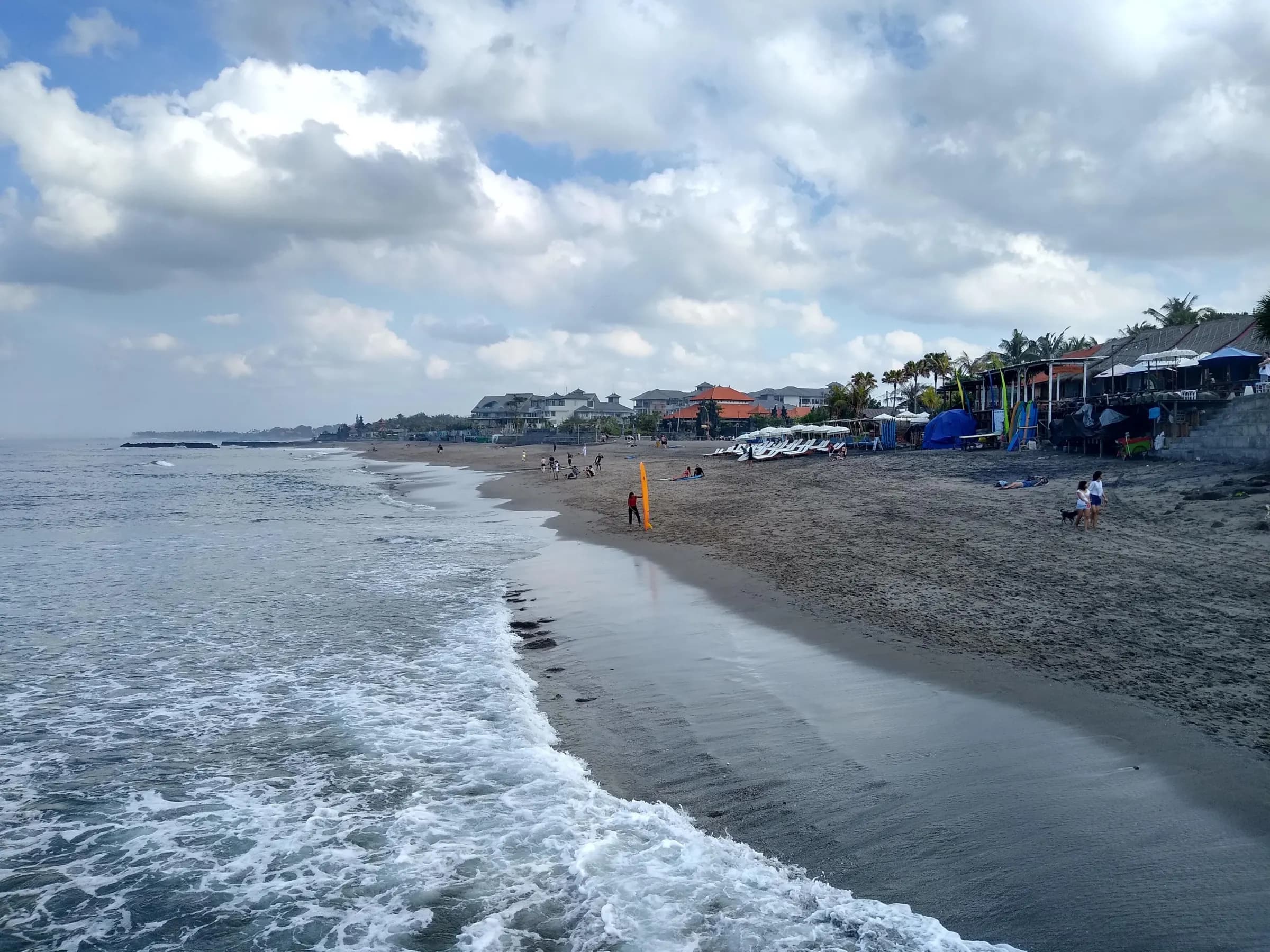
A wide dark-sand beach with small waves washing in, a few people on the sand and beach-club umbrellas behind

Canggu

Black sand, the softest learners' wave in Bali, three punchy reefs a short walk from it, and the worst traffic on the island.

Canggu is a flat, dark-sand stretch of the west coast between Berawa and Pererenan, and it is where most people who learn to surf in Bali actually learn. The sand is black volcanic grit rather than the white coral sand of the brochures, the coast faces the same direction along its whole length, and the waves are beach breaks and shallow rock shelves rather than the deep-water reef of the Bukit Peninsula.

Best for: Genuine beginners — Batu Bolong and Old Man's are the softest, most forgiving waves in southern Bali, and there is no reef to fall on; Remote workers who want fast internet, a coworking desk within walking distance and other people around

Read the Canggu guide
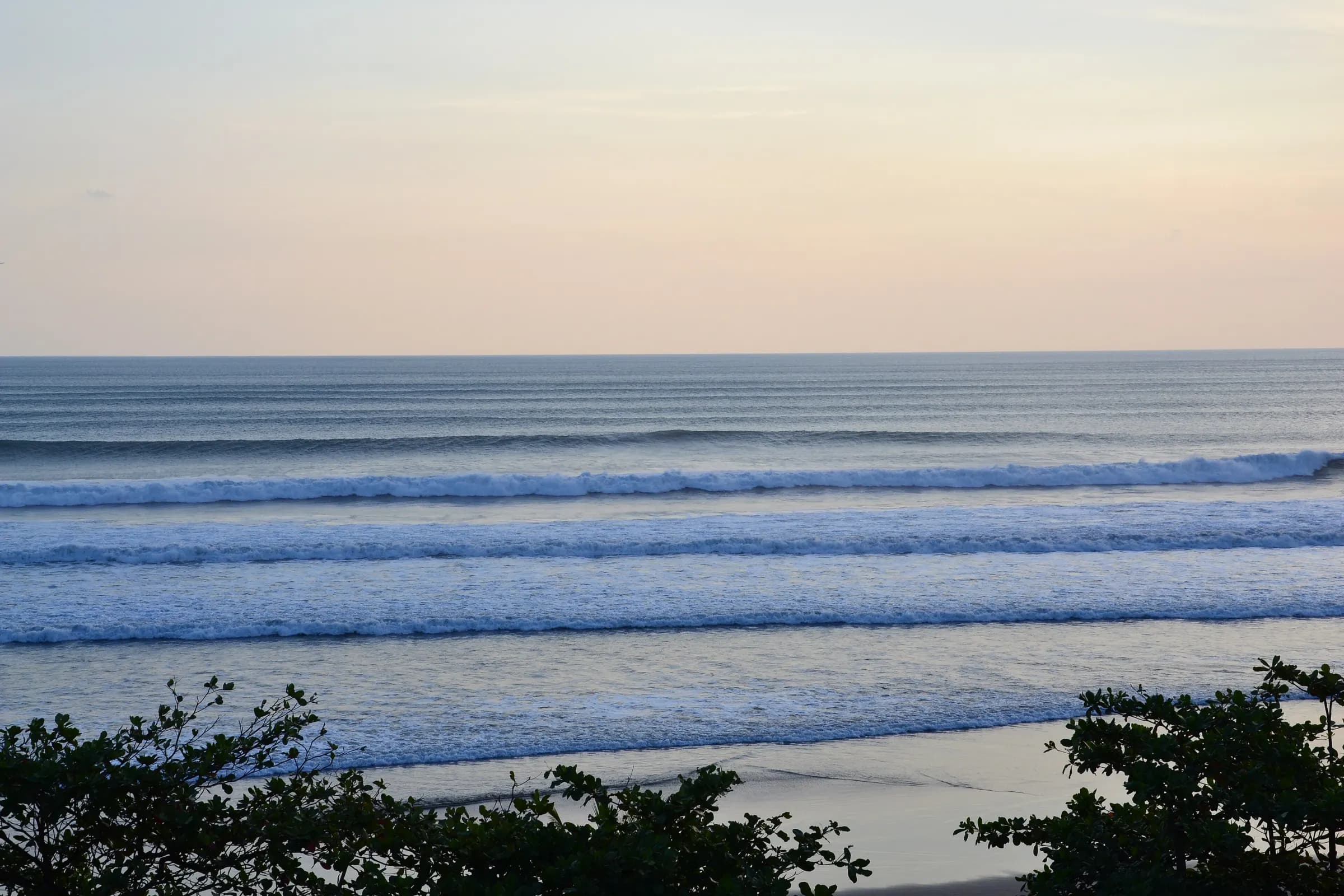
Long, even lines of surf rolling toward a sandy beach under a pale evening sky, with trees in the foreground

Seminyak

Three kilometres of sandbank, a five-star strip behind it since 1978, and an address that says Kuta for reasons nobody explains.

Seminyak is about three kilometres of straight, west-facing sand with shifting banks in front of it and a hotel strip behind. The bottom is sand the whole way, the water sat at 26.8°C the morning this page was written, and you can be out of the water and at a table in ten minutes without getting on a scooter. For a lot of people that combination is the whole point.

Best for: Improving beginners who want nothing harder than sand underneath them: every break on this stretch is sand-bottom; Anyone who wants to walk from a hotel to the beach, dinner and a spa without riding anywhere

Read the Seminyak guide
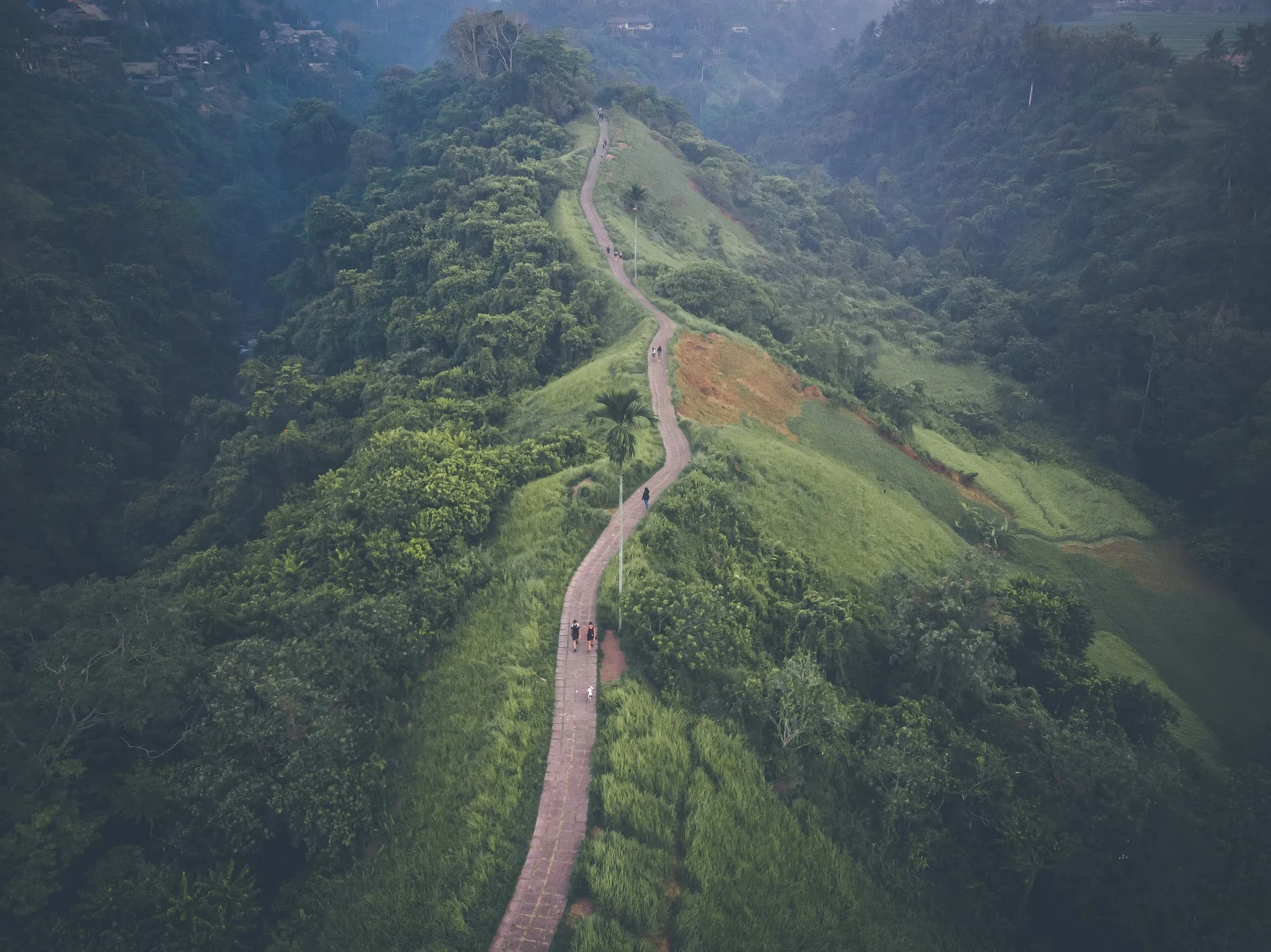
Aerial view of a paved path winding along a green forested ridge in the Campuhan valley, with a few tiny walkers on the path

Ubud

Rice terraces, temples and some of the best dinners in Bali, about an hour and a half from the airport and nowhere near a wave.

Ubud is an inland town in Gianyar Regency, about 210 m above sea level, with no beach. Wikipedia puts the district's population at 74,800 and describes it as an arts and culture centre, with yoga, museums and the Ubud Writers and Readers Festival as the draws. Bali Holiday Secrets describes it as surrounded by jungle and rice terraces.

Best for: Culture seekers and nature lovers: temples, rice terraces, museums and dance are the reason Ubud is on the map; Couples and families, which Bali Holiday Secrets names among the people Ubud suits

Read the Ubud guide
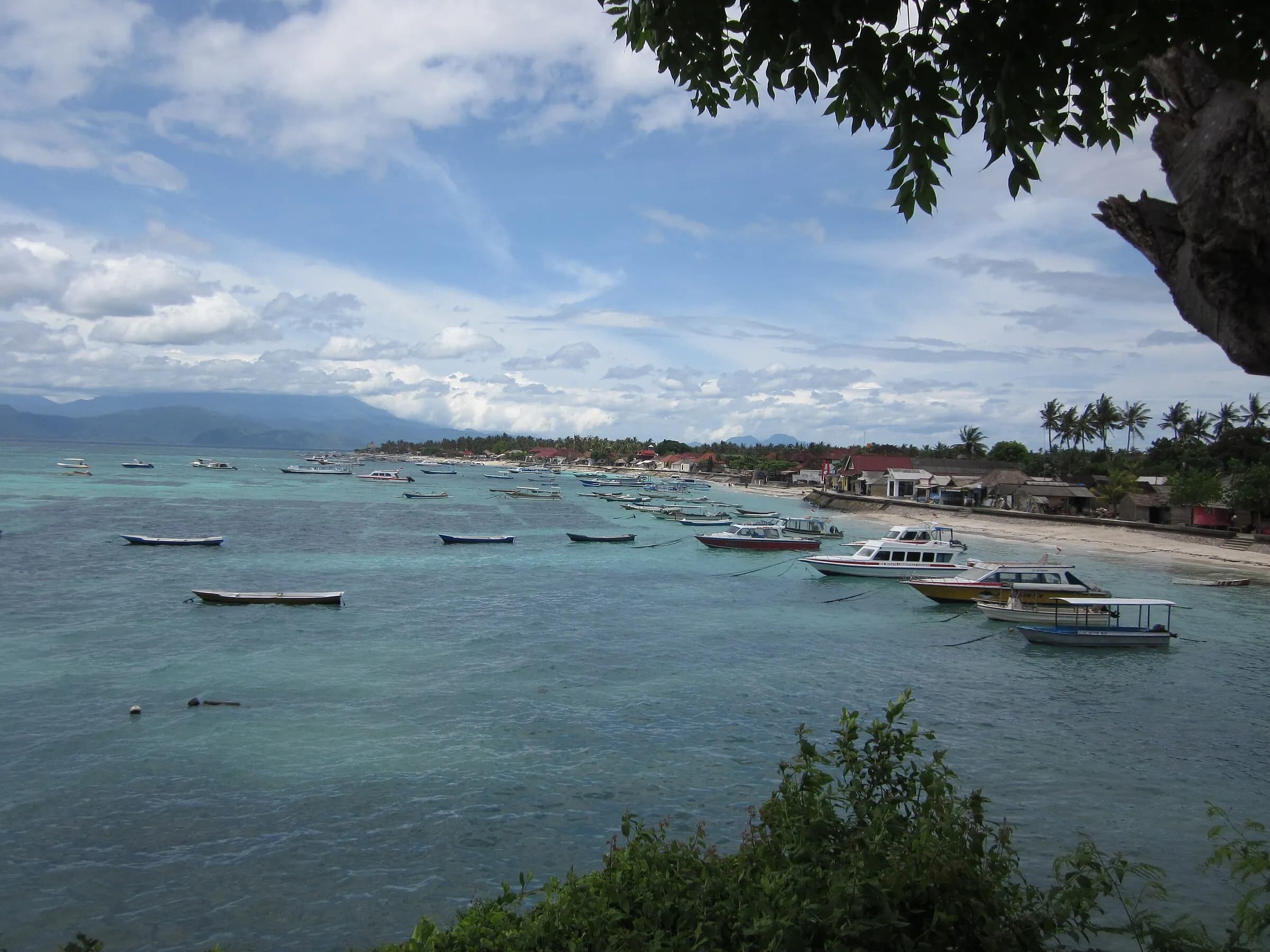
Boats moored in calm turquoise water off a sandy beach lined with low buildings and palms, with mountains on the horizon

Nusa Lembongan

Three reef breaks off one stretch of coast, half an hour by fast boat from Sanur.

Nusa Lembongan is a small island off Bali's east coast, and for a surfer it's a rare setup: three reef breaks in a row off the northwest coast, around Jungut Batu. Shipwrecks, Lacerations and Playgrounds are close enough together that you can pick between them on the day. Across a footbridge, Nusa Ceningan has a fourth.

Best for: Intermediate surfers who want several reef breaks within paddling or a short boat ride of one beach; Surfers coming from Canggu or Uluwatu who want a slower island for a few days

Read the Nusa Lembongan guide
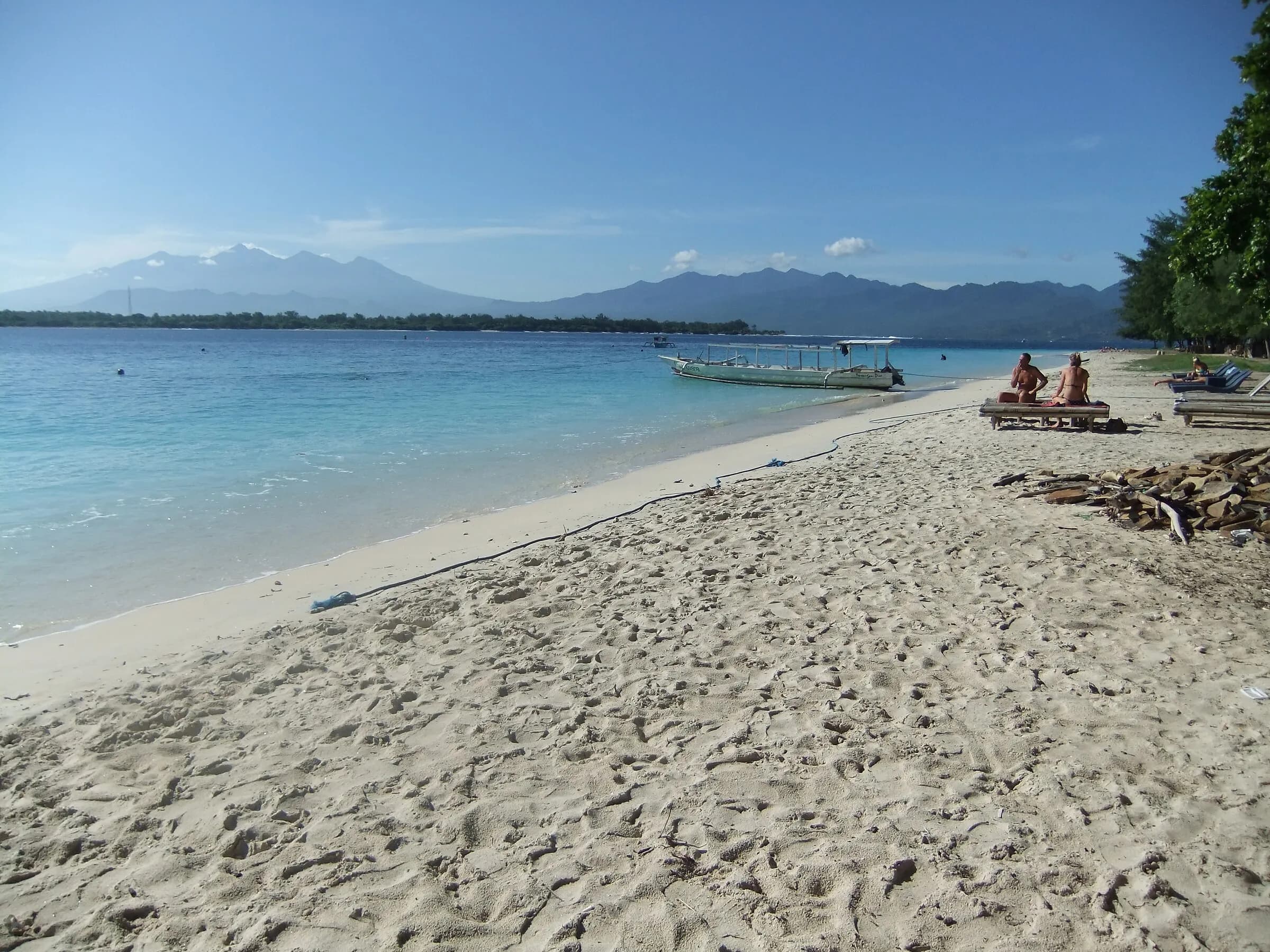
A white sand beach curving along clear turquoise water, with a moored outrigger boat and mountains across the strait

Gili Islands

Three car-free islands off Lombok, a fast boat from Bali, and some of the clearest water you can snorkel.

The Gili Islands are three small islands off the north-west coast of Lombok, a fast boat ride east of Bali. There are no cars or motorbikes, you can snorkel with turtles off the beach, and each island has its own pace: Gili Trawangan is the biggest and liveliest, Gili Meno the smallest and quietest, and Gili Air somewhere in between.

Best for: Snorkelling and diving trips: turtles, clear water and an underwater sculpture garden; A few slow days between Bali and Lombok, with no traffic

Read the Gili Islands guide

When to come

The dry season, roughly May to September, is the main event. Offshore trade winds blow steadily onto the south and west coasts, which means the entire Bukit Peninsula — Uluwatu, Padang Padang, Bingin, Impossibles, Balangan, Dreamland — is at its most consistent. This is also peak season for crowds and for accommodation prices.

From November to March the wind swings and the east coast takes over: Keramas and Sanur get the offshore mornings while the Bukit turns messy. Conditions are less predictable overall, but the island is noticeably quieter and cheaper.

April and October are the shoulder months and a reasonable compromise — both coasts can work, and neither is at peak crowd. If you are coming to learn rather than to chase swell, the smaller-swell days inside the dry season are what you actually want, not the biggest ones.

Water temperature and what to wear

Water sits between roughly 25°C and 30°C year-round — warmest around January, coolest around August. No wetsuit is needed at any point in the year.

Boardshorts or a swimsuit plus a rash guard is the standard kit, and the rash guard is doing more work for sun and reef rash than for warmth. A 1–2mm vest or springsuit is a comfort item for dawn sessions if you run cold, not a requirement. If you are surfing reef, booties are the piece of gear worth more thought than a wetsuit.

SourcesSurf-Forecast

What it costs

ItemPrice
One-bedroom apartment, city centreBali-wide index, not Bukit-specific — the Bukit runs higherIDR 17.5m (~USD 980)NumbeoWise
One-bedroom apartment, outside centreBali-wide indexIDR 10.6m (~USD 595)NumbeoWise
Meal at an inexpensive restaurantPer meal, not per monthIDR 50,000 (~USD 2.80)Numbeo
CoffeeCappuccino, per cupIDR 40,000 (~USD 2.25)Numbeo

IDR is what you actually pay. USD converted at roughly IDR 17,900 to USD 1, checked 15 August 2026.

The visa situation, honestly

Two routes cover almost every surf trip. The Visa on Arrival (index B1) costs IDR 500,000, gives you 30 days, and can be extended exactly once for another 30 — 60 days maximum, total. The tourism visit visa (index C1, which most blogs still call by its old name B211A) costs IDR 1,000,000, gives you 60 days on arrival, and can be extended repeatedly up to a cumulative 180 days.

One thing worth knowing because nearly every visa-agent site says the opposite: the official C1 page states a guarantor is not required for most nationalities — only for stateless applicants, holders of non-passport travel documents, and nationals of certain listed countries. Most travellers still use an agent, and that is a convenience choice, not a legal requirement. You do need to show around USD 2,000 in three months of bank statements.

Neither of those visas permits work. Indonesia's own answer for remote workers is the E33G remote-worker permit: it requires a contract with a company established outside Indonesia, proof of USD 60,000 annual income and a USD 2,000 bank balance, and costs IDR 7,000,000 in total fees for one year. Whether working quietly for a foreign employer on a tourist visa is enforced in practice is a separate question from whether it is permitted — it is not permitted, and 2026 has brought reports of noticeably more active enforcement. Sources on the exact scale of that enforcement are travel press rather than official statements, so treat the direction as real and the numbers as unconfirmed.

SourcesDirektorat Jenderal ImigrasiDirektorat Jenderal ImigrasiDirektorat Jenderal ImigrasiUK Foreign, Commonwealth & Development Office

The tourist levy and the overstay maths

Every foreign tourist pays a IDR 150,000 levy, once per visit rather than per entry. Pay it at lovebali.baliprov.go.id before you fly, or at a counter on arrival, and keep the QR voucher. Check the domain: the official site ends in .go.id, and lookalike .com sites charging the same fee exist.

Overstaying costs IDR 1,000,000 per day from day one, with no grace period, up to 60 days — past that it stops being a fine and becomes deportation and a re-entry ban. A forgotten extension is an expensive mistake here in a way it is not in some countries: a fortnight of overstay is IDR 14,000,000.

SourcesBali Provincial Government (Love Bali)Kantor Imigrasi Kelas I TPI Surakarta

Your Bali trip, in order

Sorted at home, easy when you land

  1. 1

    Weeks before

    Cover that includes surfing

    Read the surfing and motorbike clauses before you buy.

    SafetyWingFrom ~$56 / 4 weeks

    Check cover →
  2. 2

    While dates are soft

    A bed you can cancel

    Free cancellation on most villas and guesthouses.

    Booking.comFrom ~$25/night

    Search stays →
  3. 3

    The night before

    Data the minute you land

    Install it at home: activation needs wifi.

    Airalo~$9 / 5GB

    Get an eSIM →
  4. 4

    On a flat day

    Something for the flat days

    Day trips, temple runs and airport transfers, with upfront prices.

    GetYourGuideUpfront prices

    Browse tours →

We may earn a small commission if you buy through links on this page, at no extra cost to you. It never changes what we recommend or how anything is ranked — nobody pays to appear on these pages.

Common questions

How long can I stay in Bali as a tourist?

On a Visa on Arrival, 60 days maximum — 30 on arrival plus one 30-day extension. On the C1 tourism visit visa (formerly B211A), up to 180 days: 60 on arrival, then repeat extensions. Neither permits work of any kind.Direktorat Jenderal ImigrasiDirektorat Jenderal Imigrasi

Can I work remotely from Bali on a tourist visa?

Not legally. Tourist and visit visas carry no right to work, and Indonesian immigration treats the place the work is performed — not where your employer is based — as what matters. The lawful route is the E33G remote-worker permit, which needs a foreign employment contract, USD 60,000 annual income and IDR 7,000,000 in fees for a year. Enforcement of quiet laptop work has historically been light, but 2026 has brought reports of it tightening.Direktorat Jenderal ImigrasiDirektorat Jenderal Imigrasi

When is the best time to surf in Bali?

May to September for the south and west coasts, including the whole Bukit Peninsula — that is when the trade winds blow offshore there. November to March moves the good conditions to the east coast around Sanur and Keramas. April and October work on both.

Do I need a wetsuit in Bali?

No. Water is roughly 25–30°C year-round. Boardshorts and a rash guard cover it; a thin vest is optional for dawn sessions. Reef booties are worth more consideration than a wetsuit if you are surfing the Bukit.Surf-Forecast

How much does the Bali tourist tax cost?

IDR 150,000 per person, charged once per visit rather than each time you enter. Pay online at lovebali.baliprov.go.id before arrival or at an airport counter, and keep the QR voucher. Only the .go.id domain is official.Bali Provincial Government (Love Bali)

Plan your first Bali surf trip

  1. Pick your base

    Your level decides it. Uluwatu, Canggu, Seminyak, Ubud, Nusa Lembongan, Gili Islands: each guide says plainly who it suits and who should go elsewhere.

    Start with Uluwatu
  2. Know your first lesson

    What happens in a first surf lesson, what to bring, and how long it takes most people to stand up.

    What to expect
  3. Pack for warm water

    Rash guard, reef-safe sunscreen and booties matter more here than a wetsuit.

    Surf trip packing list

Who wrote this

Laurence Tuchin

Founder, SurfSpotGuide

Laurence founded SurfSpotGuide and built its directory of surf schools and shops across the United States, alongside a surf guide of more than 130 articles. These destination guides are researched rather than reminisced: every price, rule and rating on them is either sourced and dated or marked as an estimate, and the pages say plainly which places nobody here has been to.

Found something out of date or plain wrong? Tell me and I'll fix it.

Sources for this page (9), with the date we last read each

Sources

Every price, rule, and rating on this page traces to one of these. Dates are when we last read the source — things change fast here, so check anything you're about to spend money on.

  1. 1.
    C1 — Visa Kunjungan Wisata (tourism visit visa)

    OfficialDirektorat Jenderal ImigrasiRead 2026-08-15

  2. 2.
    B1 — Visa on Arrival

    OfficialDirektorat Jenderal ImigrasiRead 2026-08-15

  3. 3.
    E33G — Remote Worker limited stay permit

    OfficialDirektorat Jenderal ImigrasiRead 2026-08-15

  4. 4.
    Foreign Tourist Levy — FAQ

    OfficialBali Provincial Government (Love Bali)Read 2026-08-15

  5. 5.
    Rp 1 juta per hari — batas maksimal denda overstay WNA di Indonesia

    OfficialKantor Imigrasi Kelas I TPI SurakartaRead 2026-08-15

  6. 6.
    Indonesia travel advice — entry requirements

    OfficialUK Foreign, Commonwealth & Development OfficeRead 2026-08-15

  7. 7.
    Cost of Living in Bali

    DatasetNumbeoRead 2026-08-15

  8. 8.
  9. 9.
    Uluwatu water temperature and wetsuit guide

    DatasetSurf-ForecastRead 2026-08-15