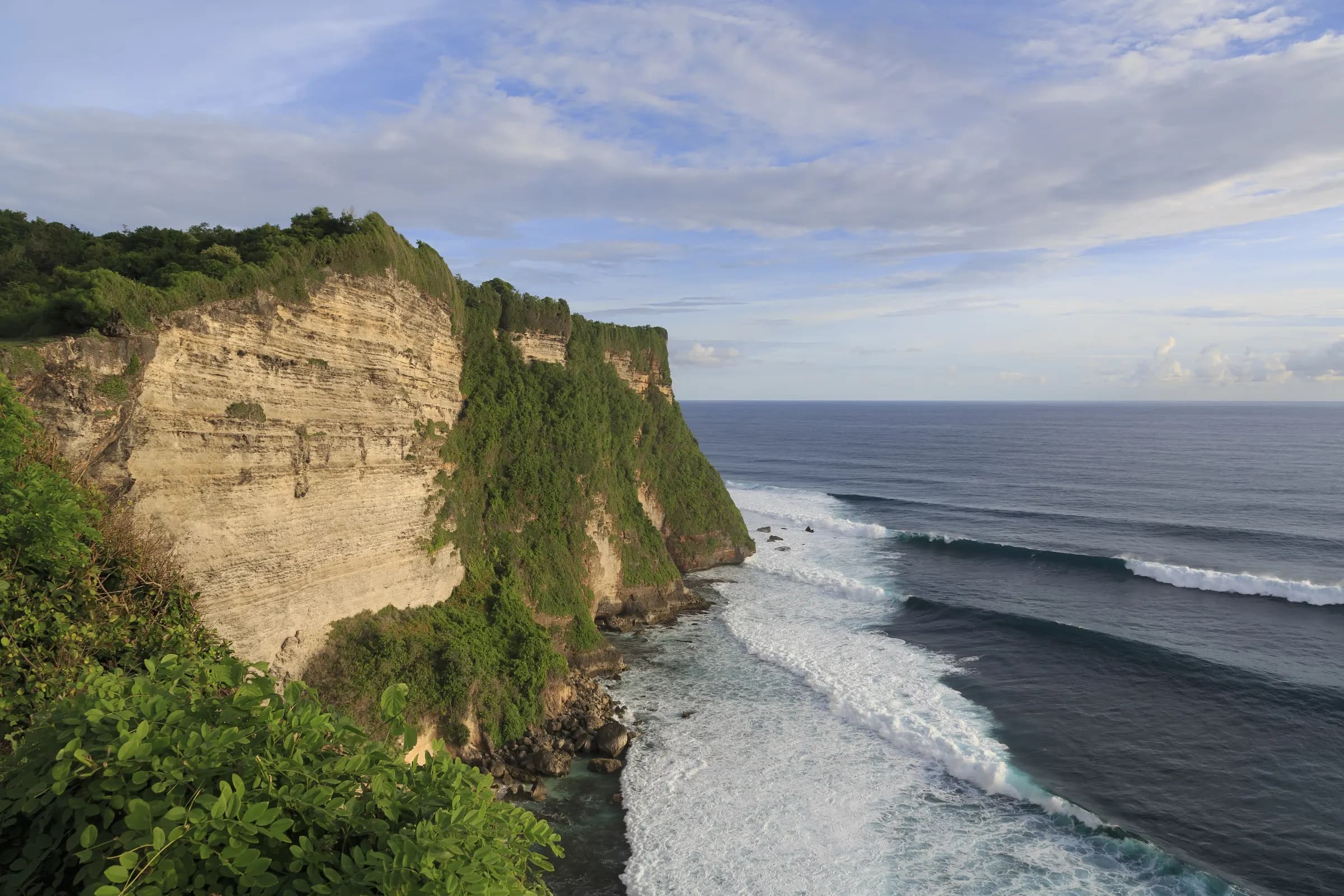
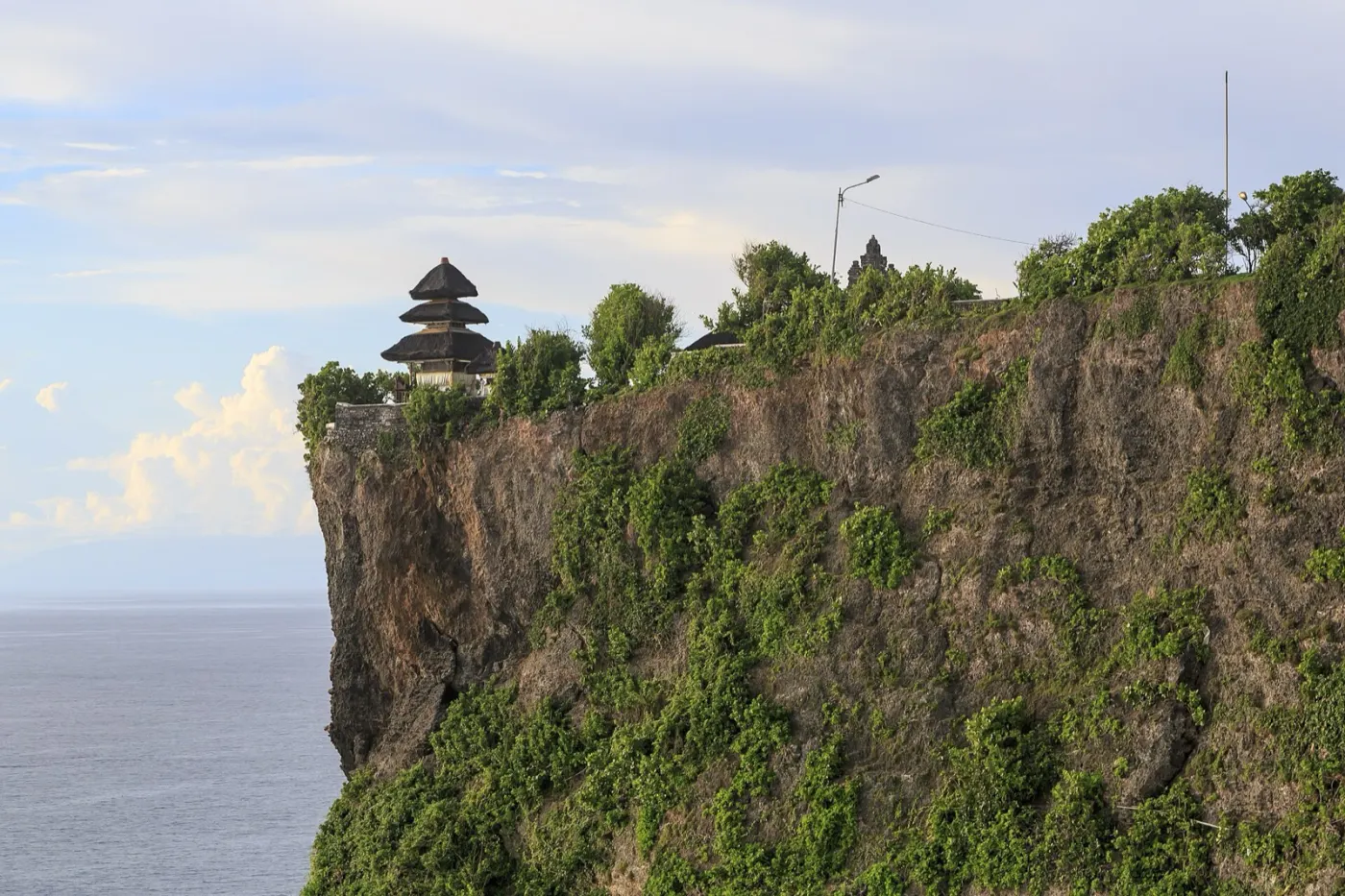
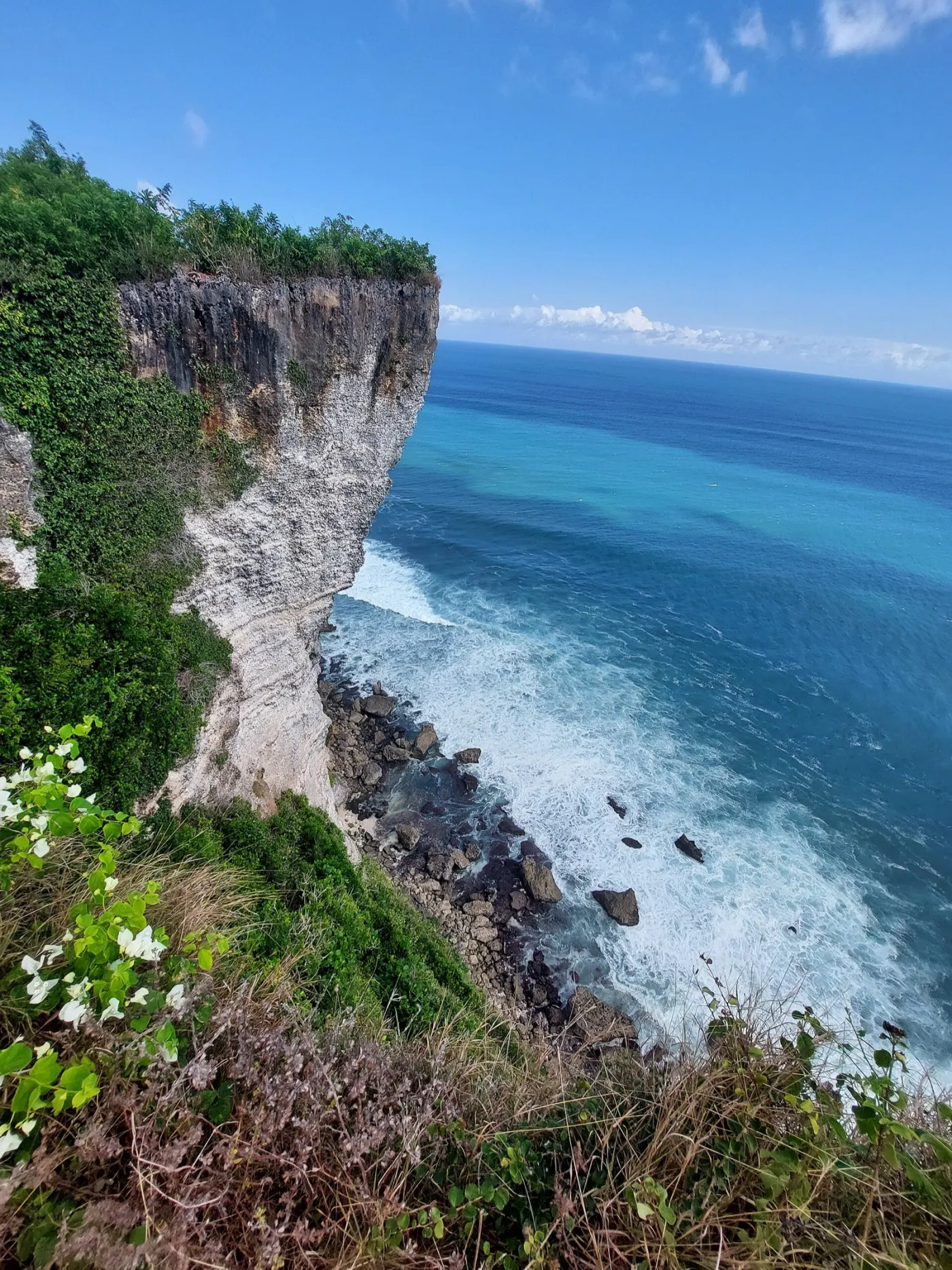
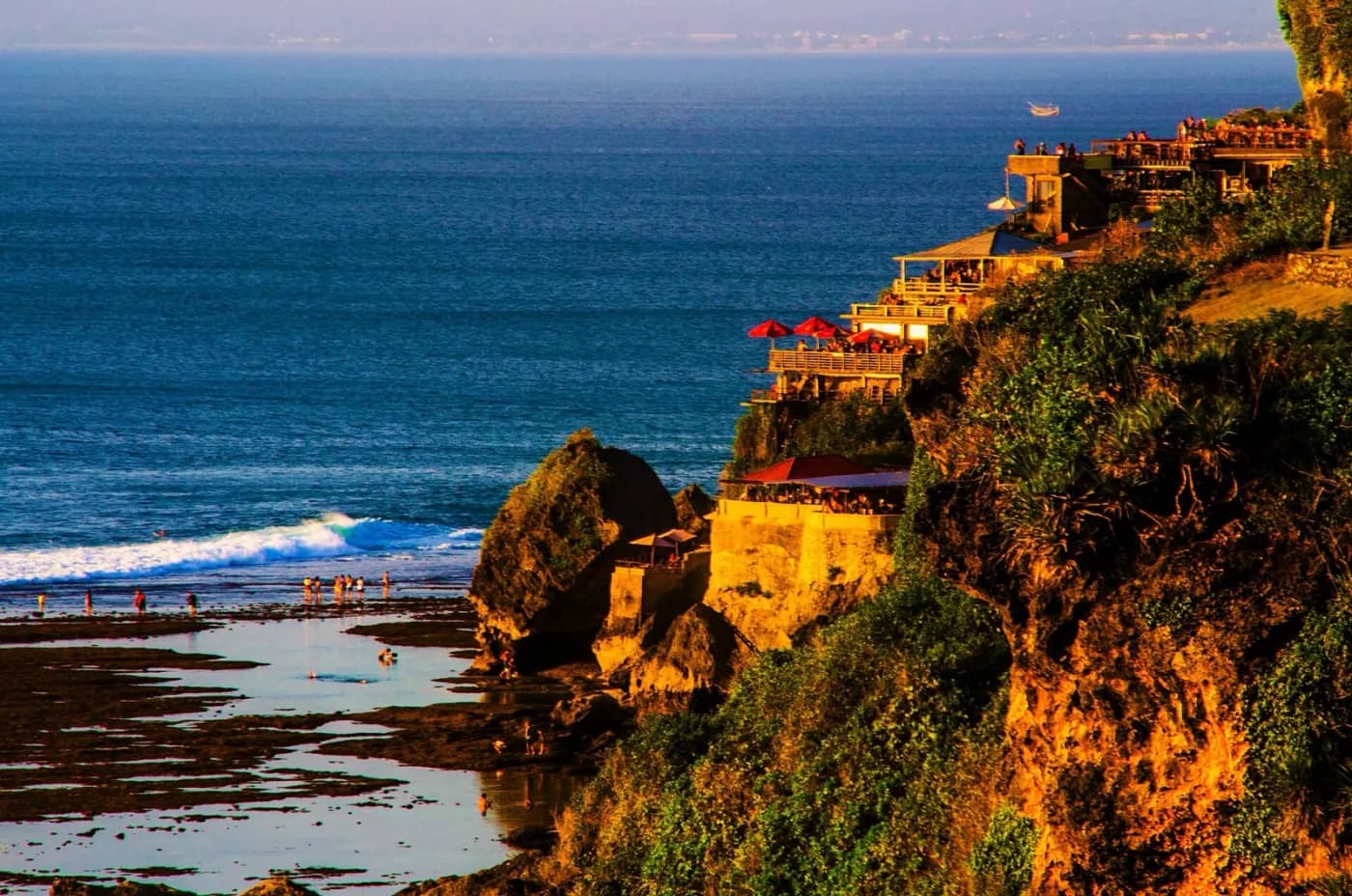
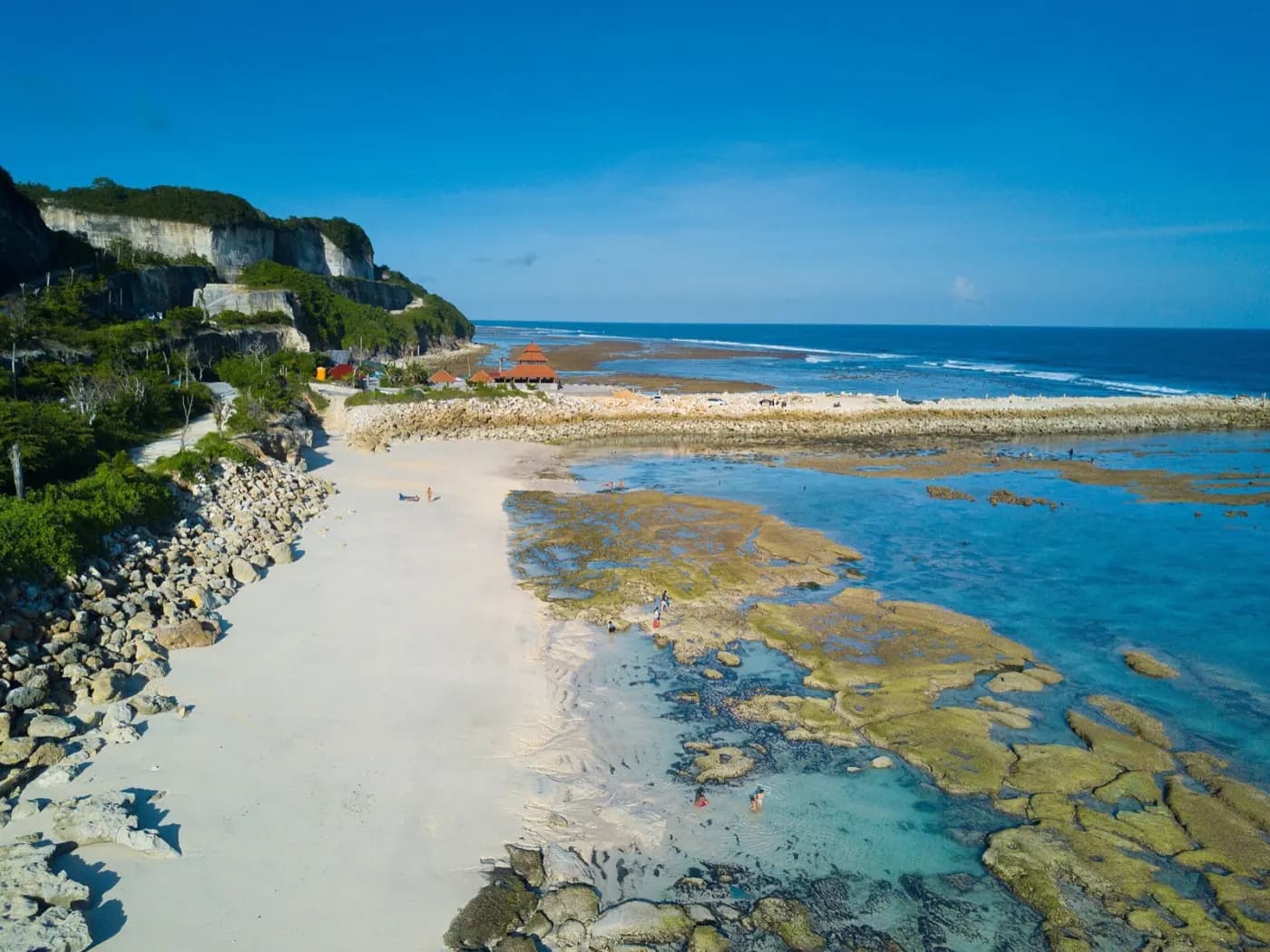
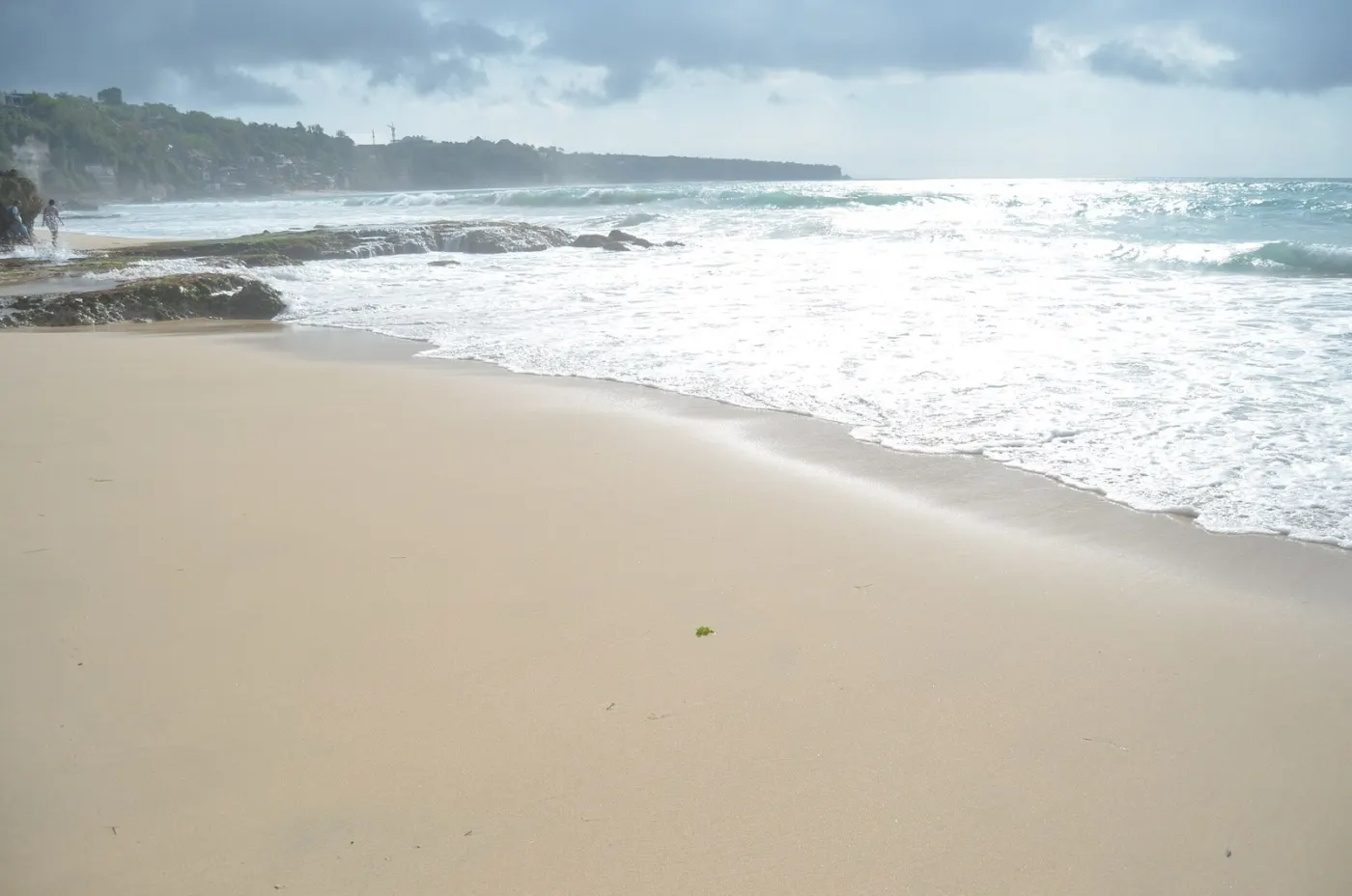
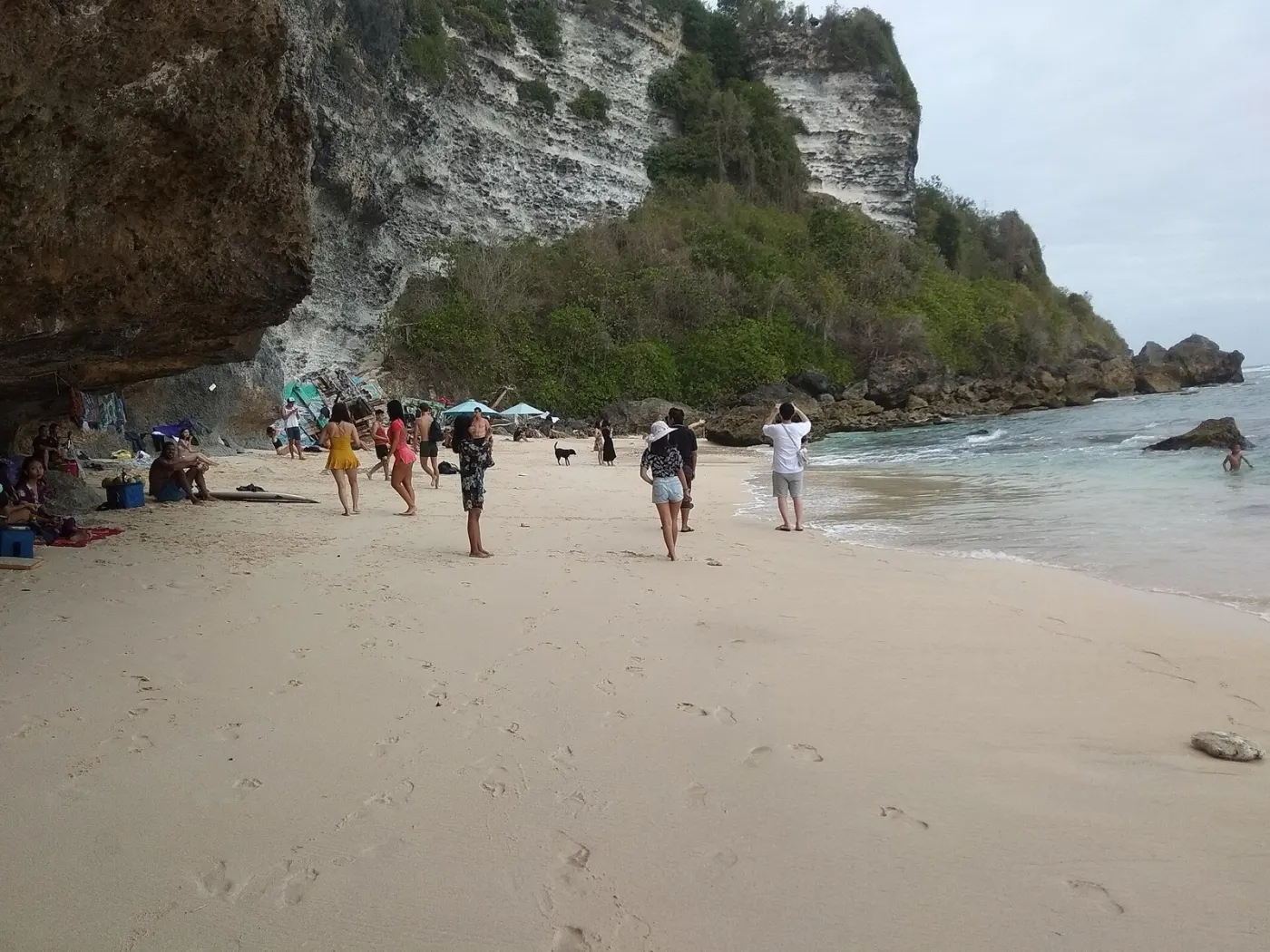
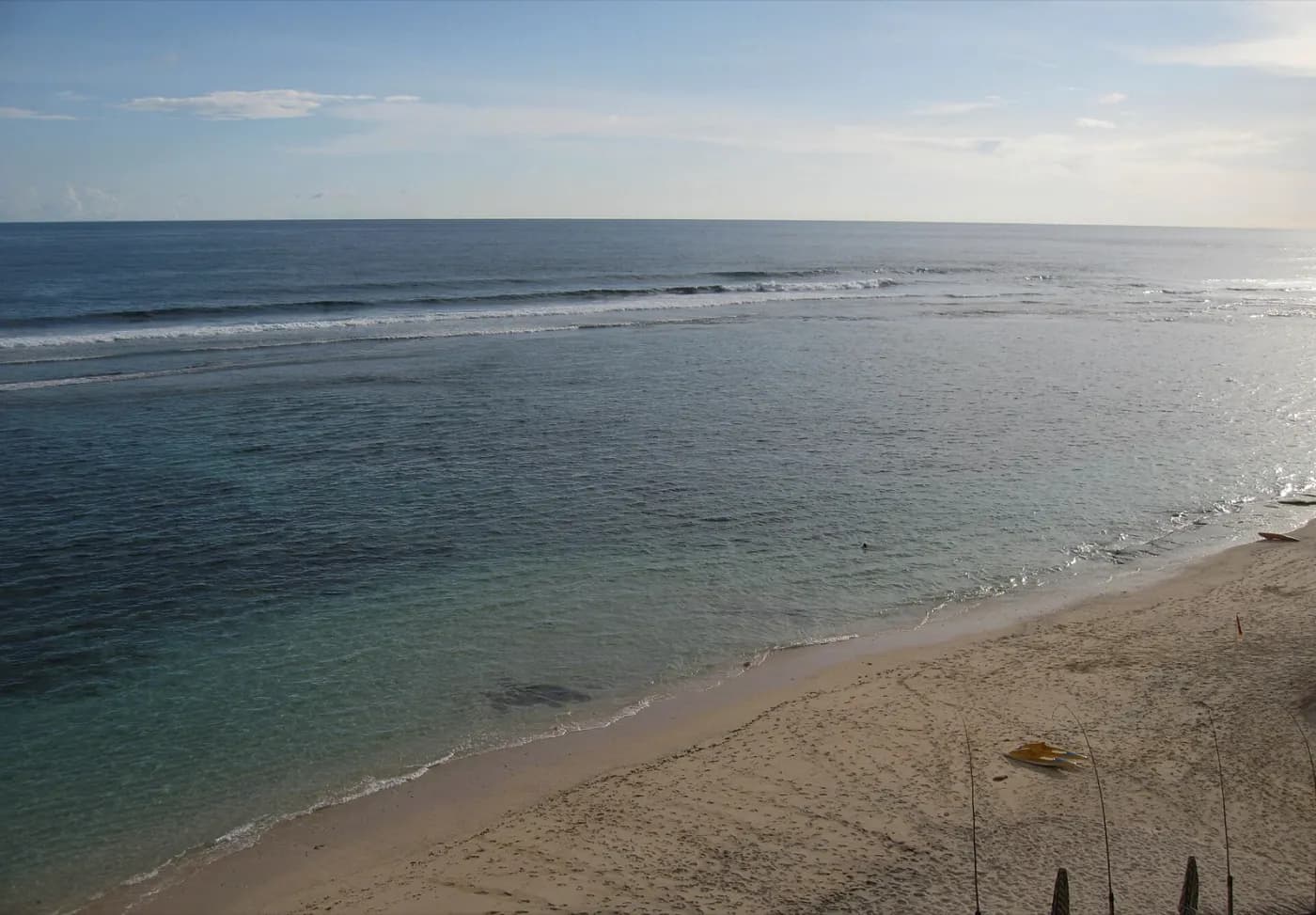
The Bukit has a lot of beaches and they are not interchangeable. Almost all of them sit at the bottom of a limestone cliff, and the difference that decides your day is how you get down. Melasti has a road cut through the cliff and you drive to the sand. Padang Padang is a staircase through a cleft in the rock. Thomas is about 160 steps. Suluban is steps and then a cave passage. Nyang Nyang is around five hundred steps and a twenty-minute descent, with the climb back in humidity as the part people underestimate. Dreamland is the flat outlier — a short path, no real staircase. If anyone in the group has bad knees, small children or an hour to spare rather than three, that list is the whole decision.
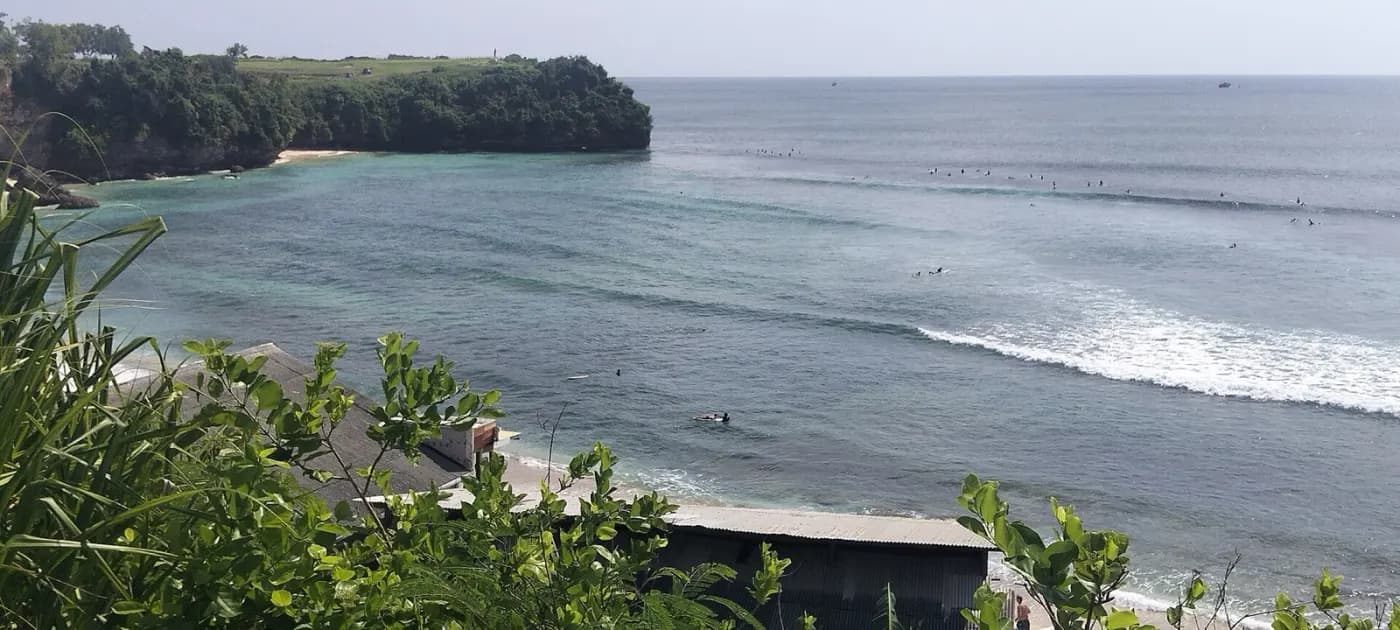
The second question is whether you want to swim or watch. Genuinely swimmable: Melasti, which has calm water and a sandy seabed, and Thomas, which is gentler than its neighbours and best at mid tide. Padang Padang is a calm little cove you can swim in too, if you can find room. Everything else here is reef. Uluwatu Beach, Suluban, Bingin and Balangan are surf beaches with reef, rock and current, and Dreamland — the one sand-bottom break, which is where beginner lessons run — still has heavy waves and rips, so it is a wade rather than a swim. Read the flags wherever you go in.
Tide governs more of this than most guides admit. Suluban has a passage that floods, so at high tide there is no beach at all and waves break on the stairs. Bingin shrinks to almost nothing at high water. Balangan goes the other way: at low tide the reef is out and there is barely any water to be in, so mid to high is the window. Uluwatu Beach and Padang Padang are both better low. Check a tide table the night before and the day plans itself.
What is at the bottom varies as much as the walk down. Melasti has toilets, showers, changing rooms, warungs and beach clubs. Balangan and Thomas have warungs and rentable sunbeds. Padang Padang has warungs and board hire. Nyang Nyang has nothing on the sand — the food is at the top of the western entrance — so take water. And Bingin has changed: in July 2025 the authorities demolished the buildings along the beach as unpermitted structures on state land, and a year later it is largely rubble with a couple of drinks carts, on a phased rebuild that officials say will not finish in 2026. It is still a fine place to watch surfing and no longer a place to plan lunch.
On money: beach access on the Bukit is a series of small cash charges, they are inconsistently reported, and they change. Published figures for Padang Padang sit at IDR 15,000 per person with about IDR 2,000 for parking; Melasti has been reported at both IDR 15,000 and IDR 20,000; Uluwatu Beach is lower. Bingin, Thomas, Balangan, Dreamland and Nyang Nyang charge nothing beyond parking, which is a few thousand rupiah — commonly around IDR 5,000 for a scooter. Treat all of these as the right order of magnitude rather than a price list, carry small notes, and expect the board at the gate to disagree with the internet. None of these booths takes a card.
Two beaches people ask about are just off the edge of this guide. Pandawa and Green Bowl sit east of the area we cover here, and in Bali that matters less in kilometres than in the half-hour each way it takes to get there and back. They are good beaches; they are a separate outing, not an addition to a Bukit beach day.